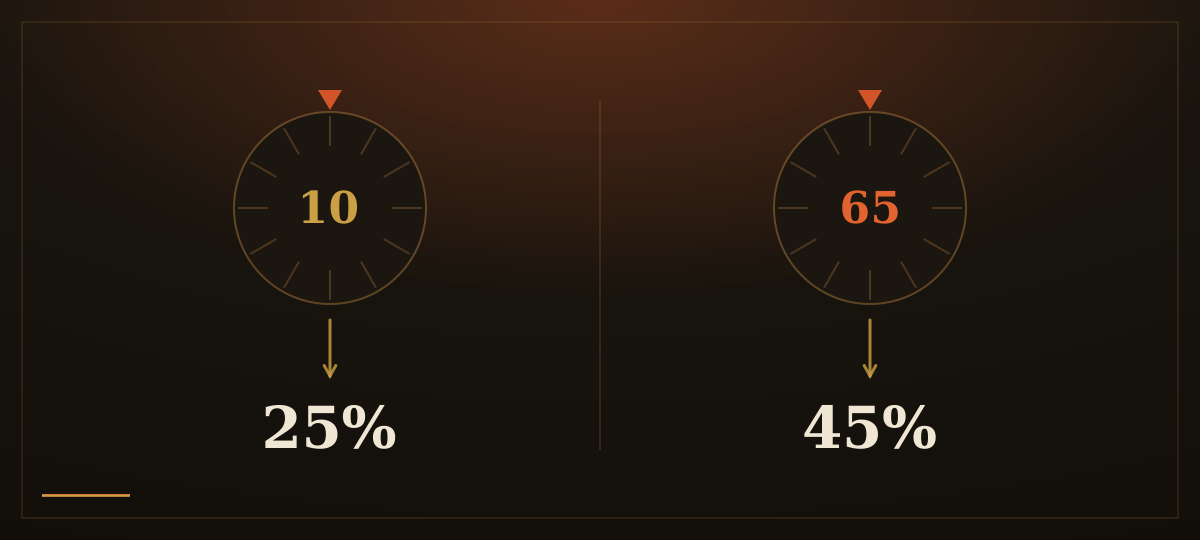
In 1974 the psychologists Amos Tversky and Daniel Kahneman spun a wheel of fortune in front of their participants. The wheel was secretly rigged to stop at either 10 or 65. People wrote the number down, then estimated what percentage of African countries were members of the United Nations. Those who had just seen 10 gave a median guess of 25 percent. Those who had seen 65 guessed 45 percent. The number was obviously random, it had nothing to do with the question, and it still pulled every answer toward itself.
Tversky and Kahneman called this anchoring. The first number a person meets becomes the starting point, and every judgment after it is an adjustment away from that point, usually a smaller adjustment than it should be. It is not a habit of careless people; it shows up in experts, in negotiators, in anyone with a working brain. We do not weigh numbers in a vacuum. We weigh them against whatever happens to be standing next to them.
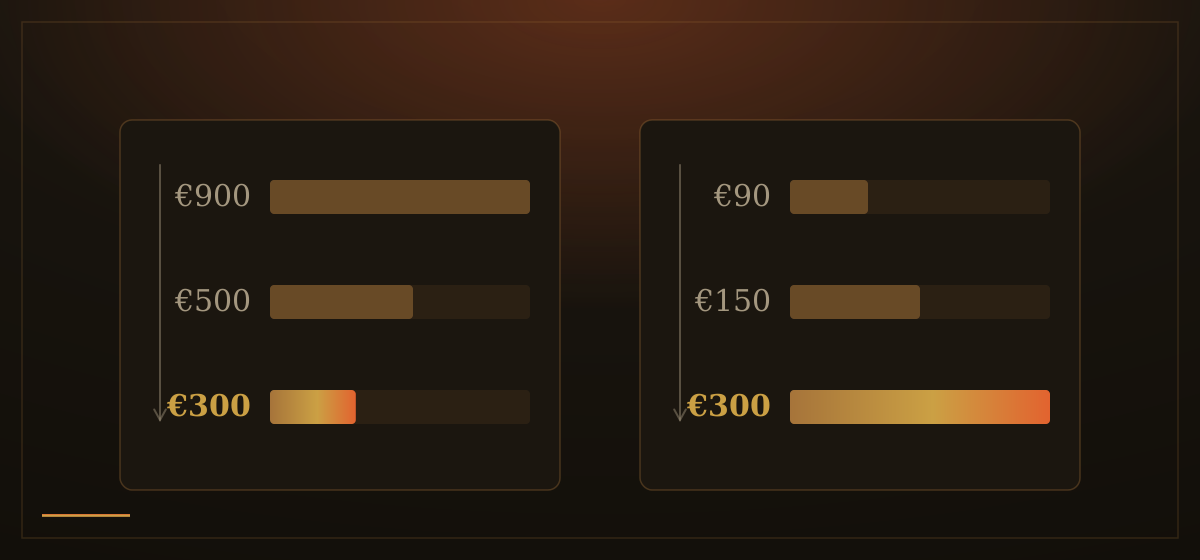
This is why the order of a price list is a design decision, not an accident. The first price a visitor sees becomes the yardstick for every price that follows. A 300 euro care plan feels expensive when it is the biggest number on the page, and modest when it sits beneath a 900 euro full build. Same number, same service, different neighbours. Showing your fuller offer first is not a trick; it simply answers the question of compared to what, before the visitor has to invent an answer of their own.
A bare number is hard to judge, so give every price something honest to lean on. Say what it includes: the pages, the photography, the year of care. Say what it replaces: the hours the owner currently spends, the printed flyers, the paid listing that brings nothing back. A price with context gets compared to something real. A price without context will be compared to something anyway, and you will not get to choose what.
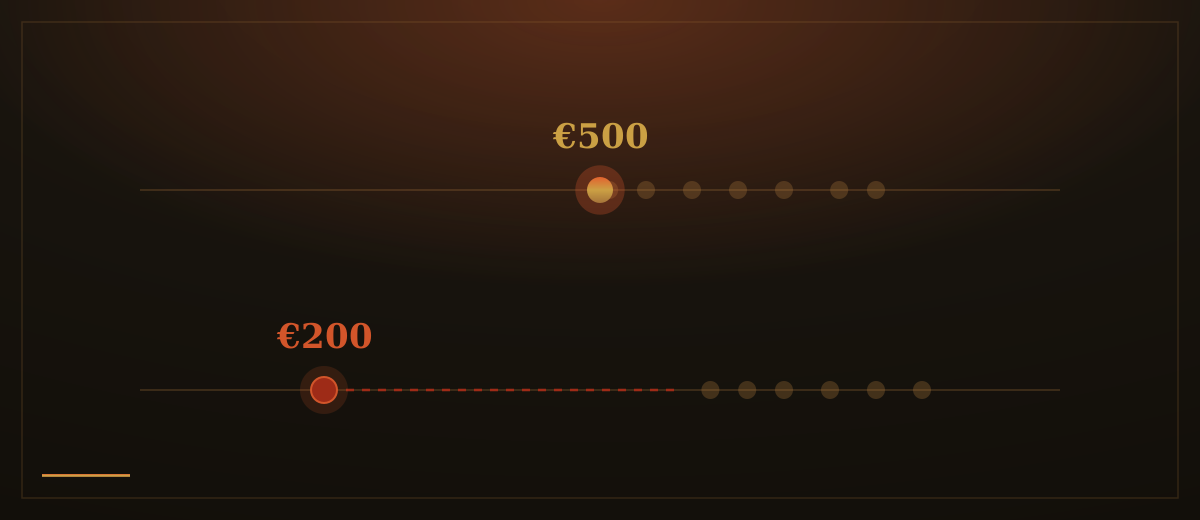
Starting prices deserve the same honesty. A price that begins with the word from is an anchor you set on purpose, and it only works if the real work lands near it. If the page says from 500 euros and most projects finish between 500 and 800 euros, the anchor is fair and the final quote feels consistent with what was promised. If the page says from 200 and nothing has ever cost 200, the anchor buys a click and spends your credibility, because the visitor remembers the first number and experiences everything above it as a broken promise.
The uncomfortable part of anchoring is that it works even on people who know about it, which is exactly why it gets abused. Invented crossed-out prices next to the real one. Countdown clocks on discounts that never actually end. These tricks do move the needle, and each one teaches the customer that your numbers are theatre. The ethical line is simple: anchor with things that are true. A real comparison, a real starting price, a plain account of what the money buys.
How we apply this: we order every price list deliberately, so the first number a visitor meets is a fair yardstick and not an accident of layout. Every price we show says what it includes, and our starting prices come from what projects actually cost, so the quote matches the page. No invented discounts, no fake clocks. The anchor is the honest value of the work, set down first, where it belongs.