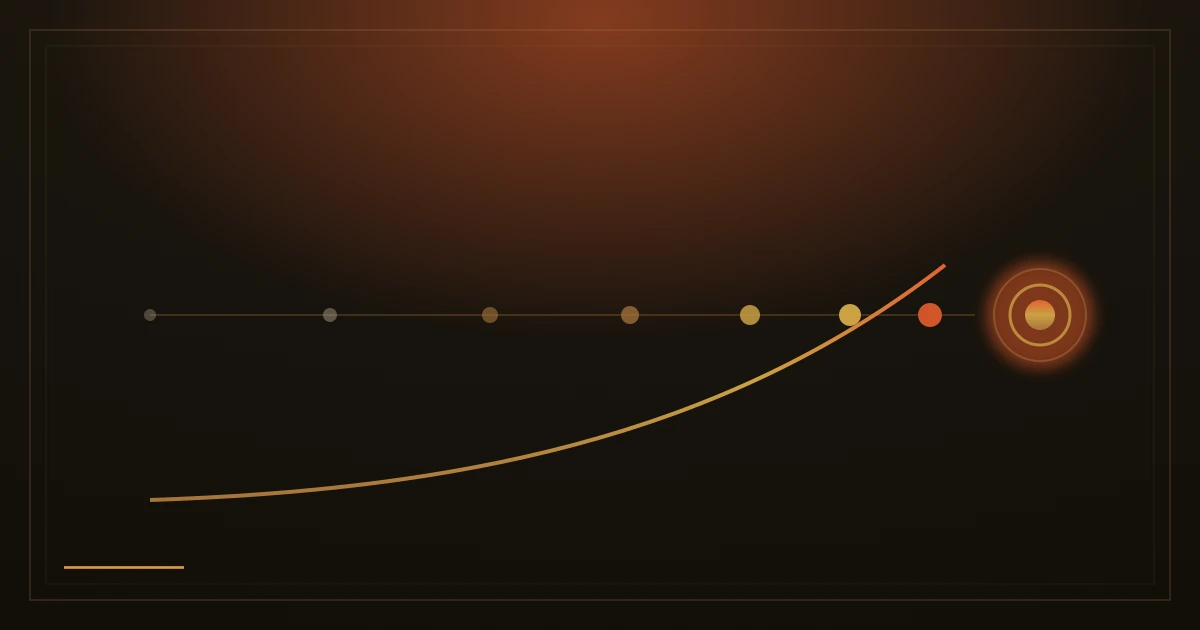
In 1934 the psychologist Clark Hull timed rats running along a track toward food and noticed something simple: the closer they got, the faster they ran. He called it the goal gradient. Effort is not spent evenly along a journey; it pours out near the end, once the finish is in sight. The pattern has held for ninety years, and it applies to far more than rats. It applies to anyone partway through anything.
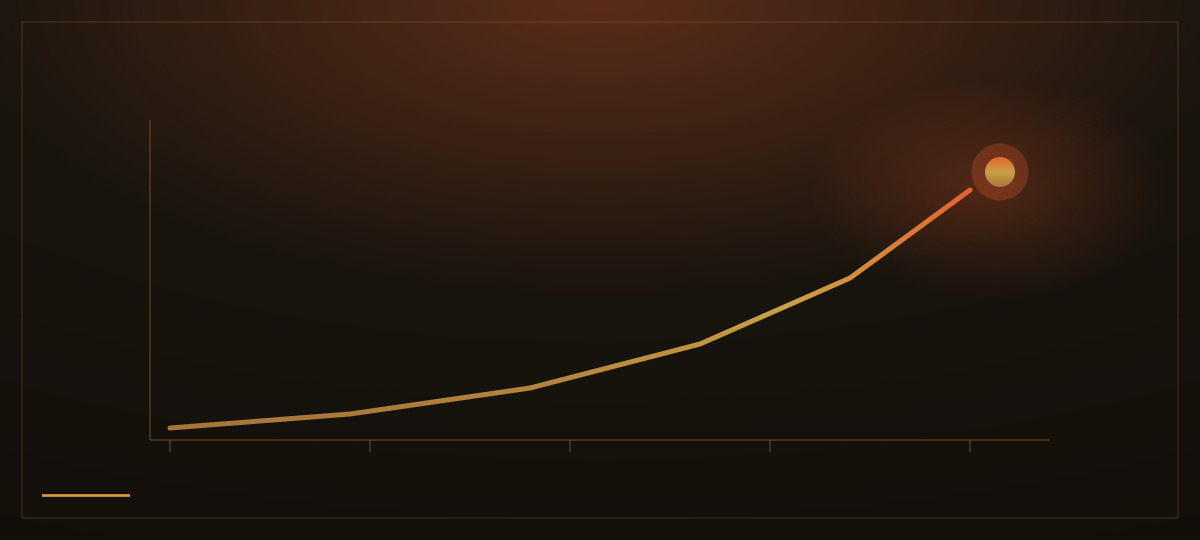
In 2006 the researchers Ran Kivetz, Oleg Urminsky and Yuhuang Zheng found the same curve in a café. Customers held stamp cards, ten stamps for a free coffee, and the purchase records showed them buying coffee more and more frequently as the card filled up. The gap between visits kept shrinking as the reward came into view. Nearness itself was the fuel.
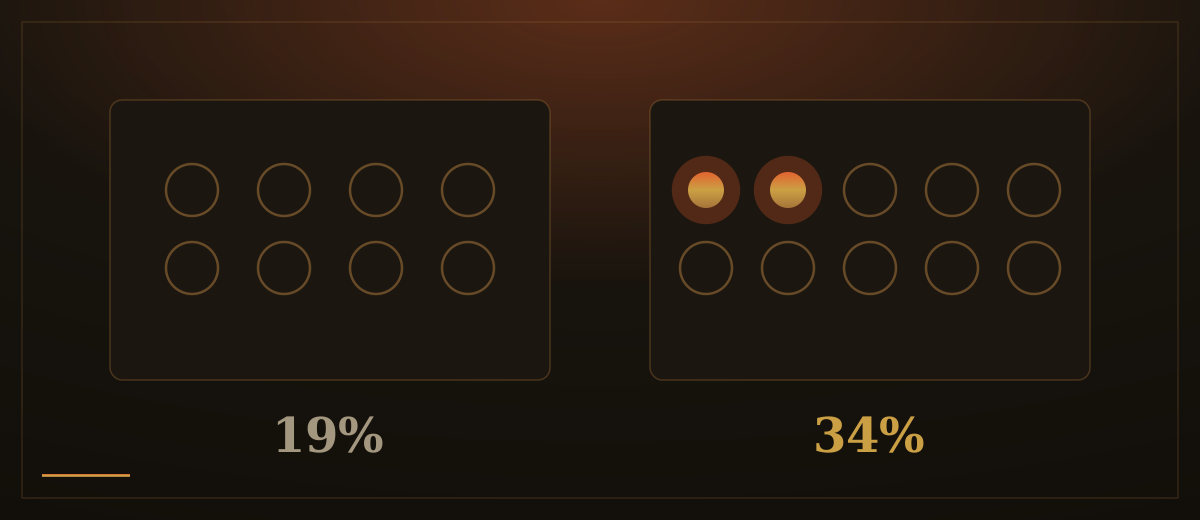
That same year Joseph Nunes and Xavier Drèze added a twist at a car wash. Some customers received a loyalty card needing eight stamps. Others received a card needing ten, with two stamps already filled in as a gift. Both groups had exactly eight washes left, yet the second group completed their cards far more often, 34 percent against 19. The researchers named the finding endowed progress: a journey that feels already begun is one people are far more willing to finish.
Websites ask visitors to complete small journeys all the time. A quote request, a booking, a purchase, a sign up. When the path is invisible, each of those feels endless: the visitor cannot tell whether two questions remain or twenty, so giving up feels cheap at every moment. Most abandoned forms are not abandoned because they were hard. They are abandoned because nobody could see how close the end was.
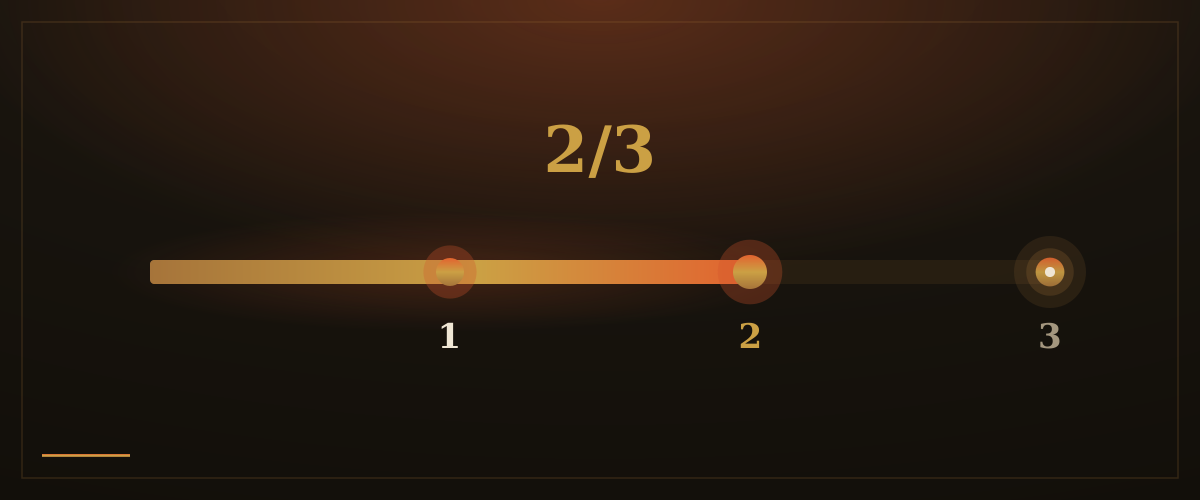
The lessons translate directly. Show the path: a form split into a few named steps, with a clear marker such as step 2 of 3, turns a vague chore into a short, countable journey. Show movement: a progress bar that visibly fills after each answer gives the visitor the same pull the café customers felt. And give a head start: when the first step already shows as done, perhaps because choosing a service on the previous page counted as step one, the journey begins at one of three instead of zero of three, and endowed progress starts working in your favour.
There is one honest rule to respect. The pull of the goal works in reverse too: nothing kills momentum like a finish line that moves. A surprise extra step at the end, a hidden cost, a form that wipes itself, these do more damage than a long path shown truthfully from the start. Keep the journey genuinely short, count the steps honestly, and let the last one truly be the last.
How we apply this: every multi-step form we build shows where the visitor stands, with numbered steps and a bar that fills as they go. We keep the whole journey to three steps or fewer, we let earlier choices count as visible progress already made, and we never add a step after the finish line. People finish what they can see the end of, so we make the end visible from the first click.