
When someone taps a link to your website on their phone, you have roughly three seconds before they give up. That is not an estimate or a rough rule of thumb. Google analyzed over 900,000 mobile landing pages and found that as load time increases from one second to three seconds, the probability of a visitor bouncing increases by 32 percent. Stretch that to five seconds and the probability jumps 90 percent. Seven seconds: 113 percent.
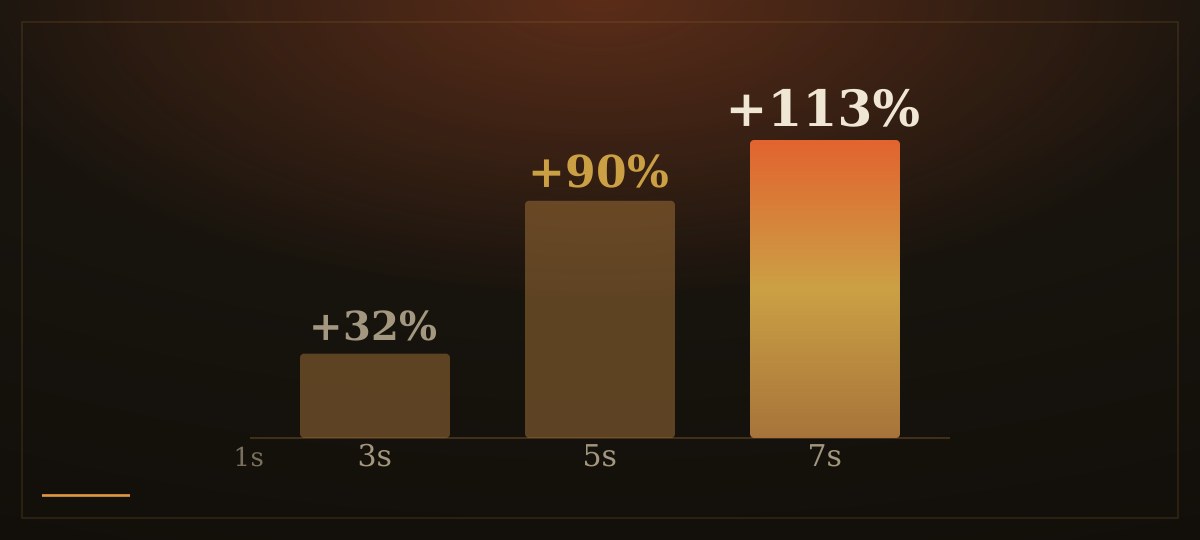
These are not failure cases. Three to seven seconds is roughly where most websites sit today.
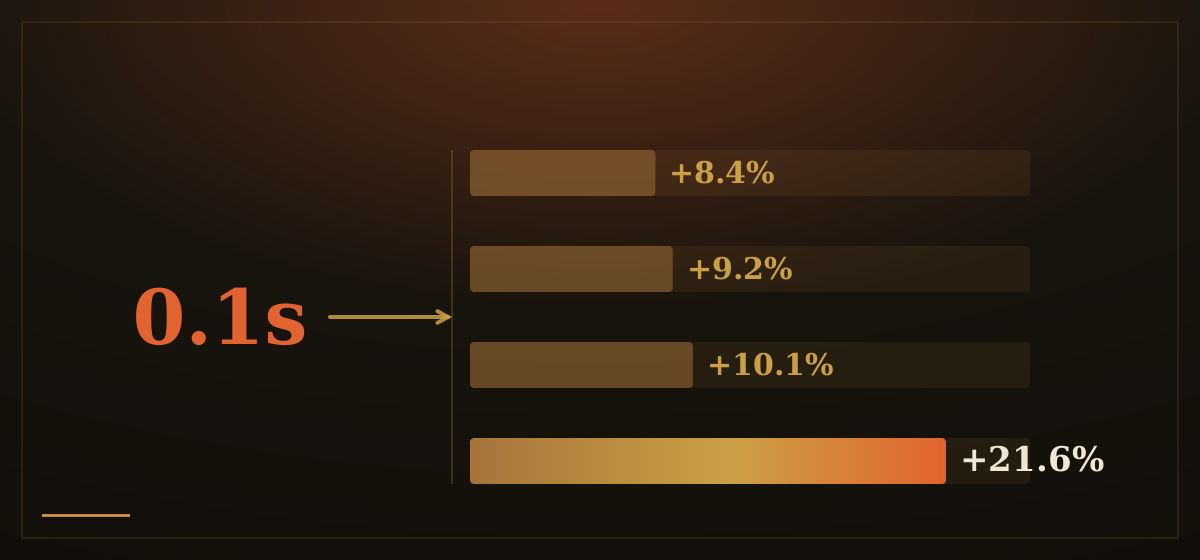
The Deloitte and Google study called Milliseconds Make Millions put concrete numbers on what this costs. Researchers analyzed 37 major brand sites across more than 30 million user sessions, then looked at what happened when mobile load time improved by just one tenth of a second. In retail, conversion rates rose 8.4 percent and the average amount customers spent increased 9.2 percent. In travel, bookings climbed 10.1 percent. For lead-generation sites, the rate of visitors who completed a contact form jumped 21.6 percent. That is the revenue impact of 100 milliseconds.
Speed matters because of how the brain works, not because of how technology works. The BBC found they lost roughly 10 percent of their audience for each additional second a page took to load. Users do not consciously decide to leave. They simply lose patience and move on before they have made a decision. You rarely get a second chance at that first impression, because you rarely get a second visit.
Google now formalizes this as three public measurements called Core Web Vitals, which affect both your search ranking and the experience your visitors actually have. The first is LCP, short for Largest Contentful Paint, which measures how quickly the biggest piece of content on the screen appears. The threshold for good is under 2.5 seconds. Think of this as the moment your visitor sees what they came for. Anything slower and they are already questioning whether they came to the right place.
The second is INP, or Interaction to Next Paint, which measures how quickly the page responds after someone clicks or taps something. The threshold is 200 milliseconds. Humans can perceive a delay of around 100 milliseconds as disconnected from their action. Above 200ms, a site begins to feel sluggish. Vodafone improved this number by 31 percent and measured an 8 percent increase in sales. RedBus, a major travel booking platform, improved their INP score and saw a 7 percent sales increase.
The third is CLS, or Cumulative Layout Shift, which measures whether content moves unexpectedly while the page loads. You have experienced this: you are about to tap a button and the page rearranges itself, sending your tap to the wrong place. The target is a score of 0.1 or below.
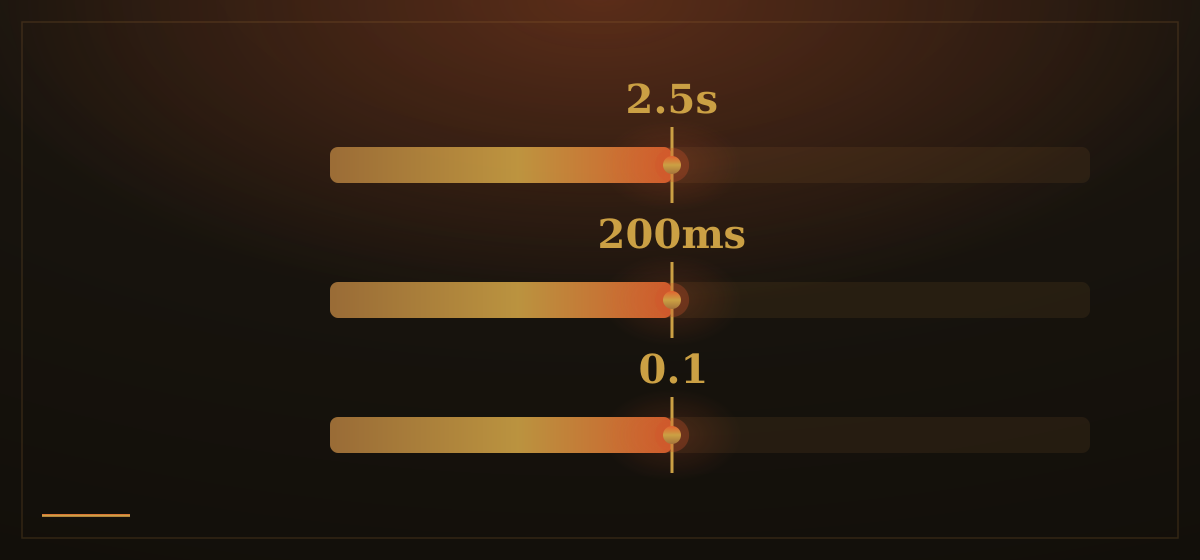
These three numbers, fast to load, fast to respond, stable as it loads, are the difference between a site that works for your visitors and one that quietly pushes them away.
How we apply this: our build process starts by removing, not adding. Every third-party script, every oversized image, every decorative element that does not serve a clear purpose gets cut before the first line of new code is written. We deliver pre-compressed assets, serve images at the right size for each screen, and write code that loads in the correct order so your visitor sees content immediately, not a blank screen while the page assembles itself. Fast is not a setting we toggle on at the end. It is the output of a disciplined process of elimination.